About Techbridge Girls (TBG)
Creating Belonging in STEM
From classrooms to community centers, Techbridge Girls (TBG) is creating spaces of belonging for youth in STEM – places where participants can explore STEM concepts, envision themselves in STEM careers, and confront inequitable systems with joy, curiosity, and rigor. At Techbridge Girls (TBG) we envision a future where youth engage with STEM fields in diverse, equitable, and sustainable ways, moving from bystanders to builders of our future.
LEARN ABOUT TECHBRIDGE GIRLS
Problem Statement
Women, and particularly Black, Indigenous, and all girls of color, are drastically under-represented in STEM fields. Millions of girls in the U.S don’t have access to quality STEM education and thus are marginalized from participating in the STEM ecosystem at an early age. The economic and opportunity impact begins in childhood.
At Techbridge Girls, we focus on Black, Indigenous, and all girls of color (BIPOC girls) growing up in marginalized communities and attending high-poverty schools because they are disproportionately represented and often overlooked for their unique contributions and brilliance in the STEM revolution.
Nationwide, about three-quarters of both African-American and Hispanic students, compared to one-third of white students, attend high-poverty schools. These schools have fewer resources like computer labs, fewer parents with college degrees and experience a harder time attracting the best teachers. One-third of these schools don’t even offer calculus, which is a critical gateway course to a STEM pathway.
We recognize our institutions do not adequately prepare nor create access to high-quality STEM learning and career paths for BIPOC girls. Where STEM is offered – and this is not consistent – it focuses on rote learning, centers the white male experience, excludes historical STEM contributions of women of color, omits social-emotional components, and does not adequately convey the potential of STEM to create a better world.
Women, and particularly BIPOC women, are drastically under-represented in STEM fields. Millions of girls in the U.S don’t have access to quality STEM education and thus are continually marginalized from participating in the STEM ecosystem. The economic and opportunity impact begins in childhood.
We recognize educators, role models and STEM professionals are critical to advancing equity and promoting belonging throughout a girls STEM journey. “Gatekeepers” (influential adults) possess the influence to maintain the status quo, or disrupt and pave the way for a more equitable future for the next generation. We empower and equip them to explore their position, power and privilege, catalyzing educators into advocates who create spaces that challenge the trope of STEM as a white male endeavor.
STEM careers have some of the greatest potential to create economic security for hundreds of thousands of girls because they’re significantly higher paying professions. On average, STEM workers earn 30% more than similarly educated non-STEM workers.
Techbridge Girls exists to create access, belonging and persistence for thousands of girls to forge a more equitable future for themselves and the STEM revolution.
Our Mission
Techbridge Girls’ (TBG) mission is to build equitable systems in STEM education. In order to achieve this mission, we identify and understand existing barriers to equity, including the ways in which biases around race, gender, and class shape educational experiences. Then, we design programs to help both teachers and students achieve new and better outcomes in STEM education and beyond.
Our Vision
TBG envisions equitable STEM learning experiences that celebrate, advocate for and center Black, Indigenous, and all girls of color to feel belonging and reach their full potential in the STEM field of their choice.
Our Approach
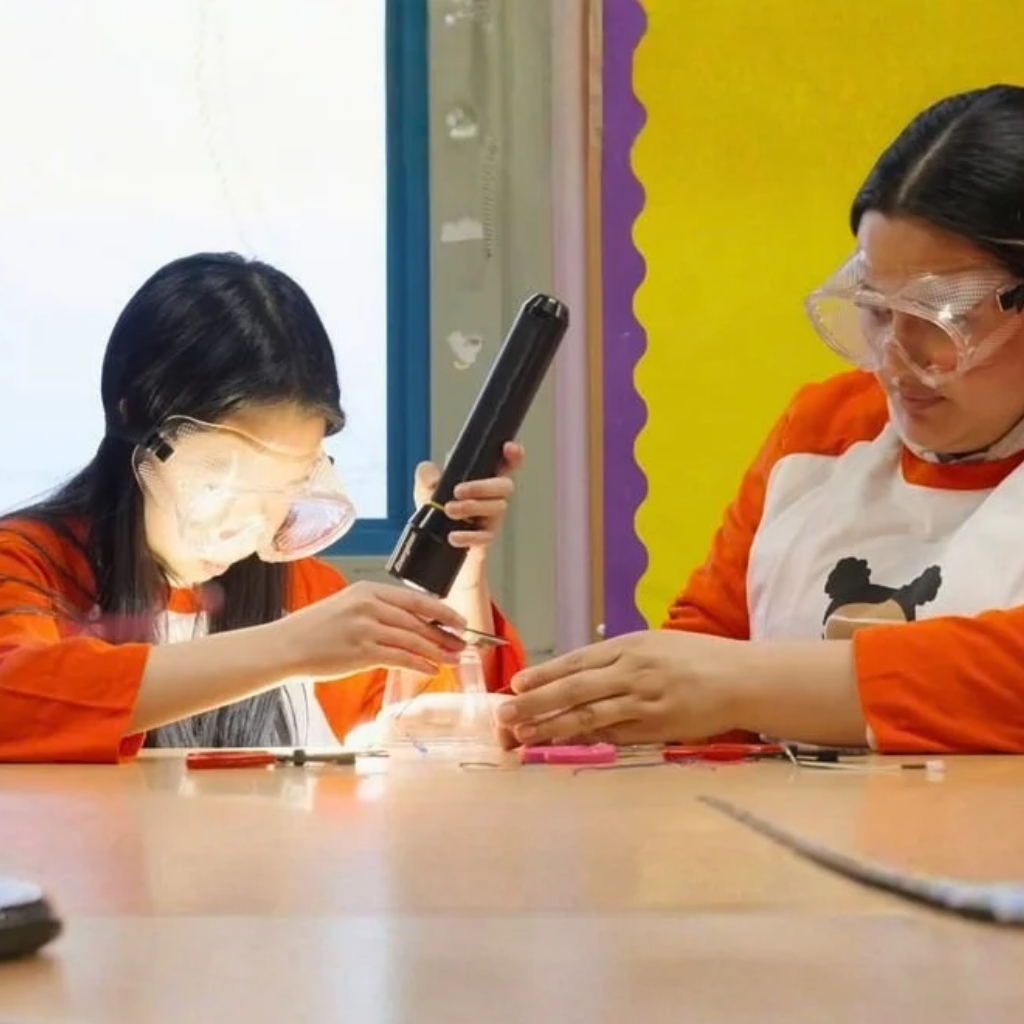
TBG’s programs are designed to invite more people into the STEM conversation. Our programs are rigorous, providing teachers and students with the concepts, resources, and confidence to engage in that conversation. Our programs are deliberately inclusive, using materials and approaches that are grounded in the histories and lived experiences of the communities we reach. And our programs are fundamentally optimistic. We encourage collaboration over competition, belonging over bragging, and a diversity of voices and viewpoints over a standard “way to be” in STEM. We make spaces that students look forward to being in. We design our programs and prepare our teachers so that all students – including girls of color and gender-expansive youth – feel prepared, curious, and excited about the possibilities of STEM concepts and careers.
Who We Serve
While TBG programs are open to anyone, our work is specifically designed to reach those students who currently have the least access to opportunities in STEM: Black, Latina, and Indigenous girls and gender-expansive youth. Most of the girls and teachers we serve attend or teach at Title I schools.
Along with our award-winning curriculum, Techbridge Girls provides the training, tools and community of support for educators, administrators, and leaders to apply a culturally-responsive, equity-focused approach to STEM education in communities across the U.S.
Inclusion and Belonging
Techbridge Girls remains steadfast in our mission to promote equitable systems in STEM education. Our work has always been grounded in identifying and overcoming barriers to STEM education, including racial, gender, and class bias. We know that every child carries a spark of genius. Our work is to see that spark and help it to grow. Together, we are building spaces of belonging, where all of our students and teachers have the freedom, the support, and the resources to explore and to shape the world we live in.